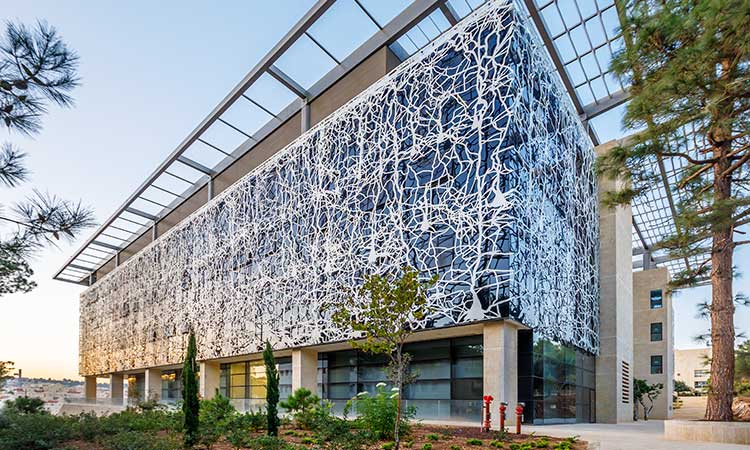
The Edmond and Lily Safra Center for Brain Sciences
The Edmond and Lily Safra Center for Brain Sciences (ELSC) aims to develop a thriving interface between theory and experimentation across levels – cognitive, biological, and computational neuroscience – paving the way to innovative discovery in brain research
Click here to see the “Papers of the Month” highlights as well as a full list of ELSC scientific publications.
What’s New at ELSC
The latest news and developments from ELSC’s labs, offices and classrooms.
"Today's basic science is tomorrow's technology. What we at ELSC develop and discover today is bound to transform tomorrow's society."
Prof. Israel Nelken, Director of ELSC
ELSC
Members
Opportunities
Programs, internships, and open positions – find your opportunity at ELSC today!
Picture of the Month
Poems from “Neuropoetry” on display in the Goodman Building lobby.