The focus of the Leon Deouell’s Human Cognitive Neuroscience Lab is on the interface between automatic, non-conscious stages of information processing in the brain and conscious perception and action. This interest stems from observations and empirical studies of stroke patients mainly with right hemisphere damage and unilateral neglect, who lose the ability to attend and respond to the part of space opposite their lesion. To investigate what types of structures and processes need to be intact to support the transition from background processing to conscious awareness of events in the environment, we use performance measures, eye movements, electrophysiology (EEG and intracranial ECOG) and functional MRI. The participants in our studies are young adults (students), patients, and age matched controls. Currently, our studies focus on the how regularity affects the processing of incoming stimuli, why we sometimes miss information that we see in free viewing (using eye-fixation-related-potentials), and how visual information is represented in the brain beyond the first moment of recognition.
Professor Leon Y. Deouell Lab
ELSC Members
Home » ELSC Members » Professor Leon Y. Deouell
















Psychological science (2026)
Communications Biology 5, 909 (2022)
bioRxiv (2021)
Brain Communications 3 (3), fcab193 (2021)
cortex 136, 41-55 (2021)
Cerebral Cortex 32 (1), 158-175 (2022)
bioRxiv (2022)
Annual Review of Neuroscience 45, 403-423 (2022)
Brain Topogr (2020)
NeuroImage: Clinical Volume 26, 2020, 102237 (2020)
Frontiers in Human Neuroscience 13:264 (2019)
Journal of Cognitive Neuroscience Early Access p.1-17 (2019)
Experimental Gerontology (2019)
Neuroimage; 184:119-129 (2019)
Neuropsychologia, 13, 126-139 (2018)
Cerebral Cortex (2018)
European Journal of Neuroscience, 48:3567-3582 (2018)
Trends in Cognitive Sciences, 22, 956-957. (2018)
Psychophysiology, 54, 1663-1675 (2017)
PLOS Biology, 15(9), e2003534 (2017)
Journal of Cognitive Neuroscience, 29(1), 203-219 (2017)
eLife, 6. (2017)
PLOS Biology. 15(2): e2001665 (2017)
Neuroimage, 161, 67-79 (2017)
J Neural Eng 13, 026010 (2016)
Proceedings of the National Academy of Science, 113, 6755-60 (2016)
eLife, 5, e17243 (2016)
Neuropsychologia, 83, 1-4 (2016)
European Journal of Neuroscience, 43, 1284-5 (2016)
Plos One, 11(12), e0167351 (2016)
Cognition,.146, 324-338 (2016)
eNeuro, 3(5) (2016)
Journal of Neuroscience, 36(27), 7154-7166 (2016)
Journal of Cognitive Neuroscience. 27, 2133-46 (2015)
Journal of Cognitive Neuroscience, 26, 1555-71 (2014)
Frontiers in Human Neuroscience 8 (2014)
IEEE Transactions on Biomedical Engineering (TBME), 61, 2290-303 (2014)
Neuropsychologia 56, 447-458 (2014)
Frontiers in Human Neuroscience 7: 162 (2013)
Neuropsychologia; 51(13):2729-39 (2013)
Front Neurosci. 7: 150. (2013)
J Neurosci. 32(39):13501-9 (2012)
Conscious Cogn. 2011 Jun; 20(2): 269–279 (2011)
Neuroimage. 2011 Sep 1;58(1):213-25 (2011)
J Neurosci. 2011 Jan 19;31(3):922-7 (2011)
Psychol Sci. 2011 Jun;22(6):764-70 (2011)
Exp Brain Res. 2011 Mar;209(2):193-204 (2011)
Brain Topogr. 2011 Mar;24(1):30-9 (2011)
Conscious Cogn. 2011 Sep;20(3):756-67 (2011)
Neuropsychologia, Volume 48, Issue 2, Pages 507-517 (2010)
Journal of Cognitive Neuroscience, Volume 22 , No. 7, p.1440-1451 (2010)
NeuroImage, Volume 49, Issue 3, Pages 2248-2263 (2010)
Neuropsychologia, Volume 48, Issue 7, Pages 2130-2139 (2010)
Frontiers in Human Neuroscience 3:7 (2009)
International Journal of Psychophysiology, Volume 72, Issue 3, Pages 260-266 (2009)
Human Brain Mapping, Volume 30, Issue 11, Pages 3687-3695 (2009)
Brain Topography, Volume 22, Issue 1, pp 3–6 (2009)
Neuron. 2008 May 8;58(3):429-41. (2008)
Requirements: Candidates must hold a PhD degree in the field of cognitive neuroscience or a related discipline and have prior experience in human electrophysiology (EEG/MEG/ECOG).
Experience with fMRI is an advantage. Candidates should be driven and able to work independently yet enjoy the collaborative spirit of the lab. Candidates should be proficient in English.
Further details: Possible start of employment: immediate For more information, please contact:
leon.deouell@mail.huji.ac.il
Lab Website
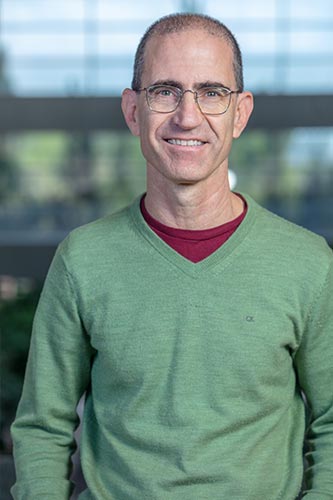
Professor Leon Y. Deouell
Professor and Director of the Edmond and Lily Safra Center for Brain Sciences
The Suzanne and Charles Goodman Brain Sciences Building,
Level 1, Room 1101, Edmond J. Safra Campus,
The Hebrew University of Jerusalem, 9190401
The focus of the Leon Deouell’s Human Cognitive Neuroscience Lab is on the interface between automatic, non-conscious stages of information processing in the brain and conscious perception and action. This interest stems from observations and empirical studies of stroke patients mainly with right hemisphere damage and unilateral neglect, who lose the ability to attend and respond to the part of space opposite their lesion. To investigate what types of structures and processes need to be intact to support the transition from background processing to conscious awareness of events in the environment, we use performance measures, eye movements, electrophysiology (EEG and intracranial ECOG) and functional MRI. The participants in our studies are young adults (students), patients, and age matched controls. Currently, our studies focus on the how regularity affects the processing of incoming stimuli, why we sometimes miss information that we see in free viewing (using eye-fixation-related-potentials), and how visual information is represented in the brain beyond the first moment of recognition.

chaos and delays, NeurIPS (2020)
Annual Review of Condensed Matter Physic,501-528,11 (2020)
Cell, Volume 177, Issue 3, Pages 669-682.e24, ISSN 0092-8674, (2019)
Science, Vol. 365, Issue 6453, eaaw5202 (2019)
NeurIPS (2016)
Phys. Rev. X, 5, 041030 (2015)
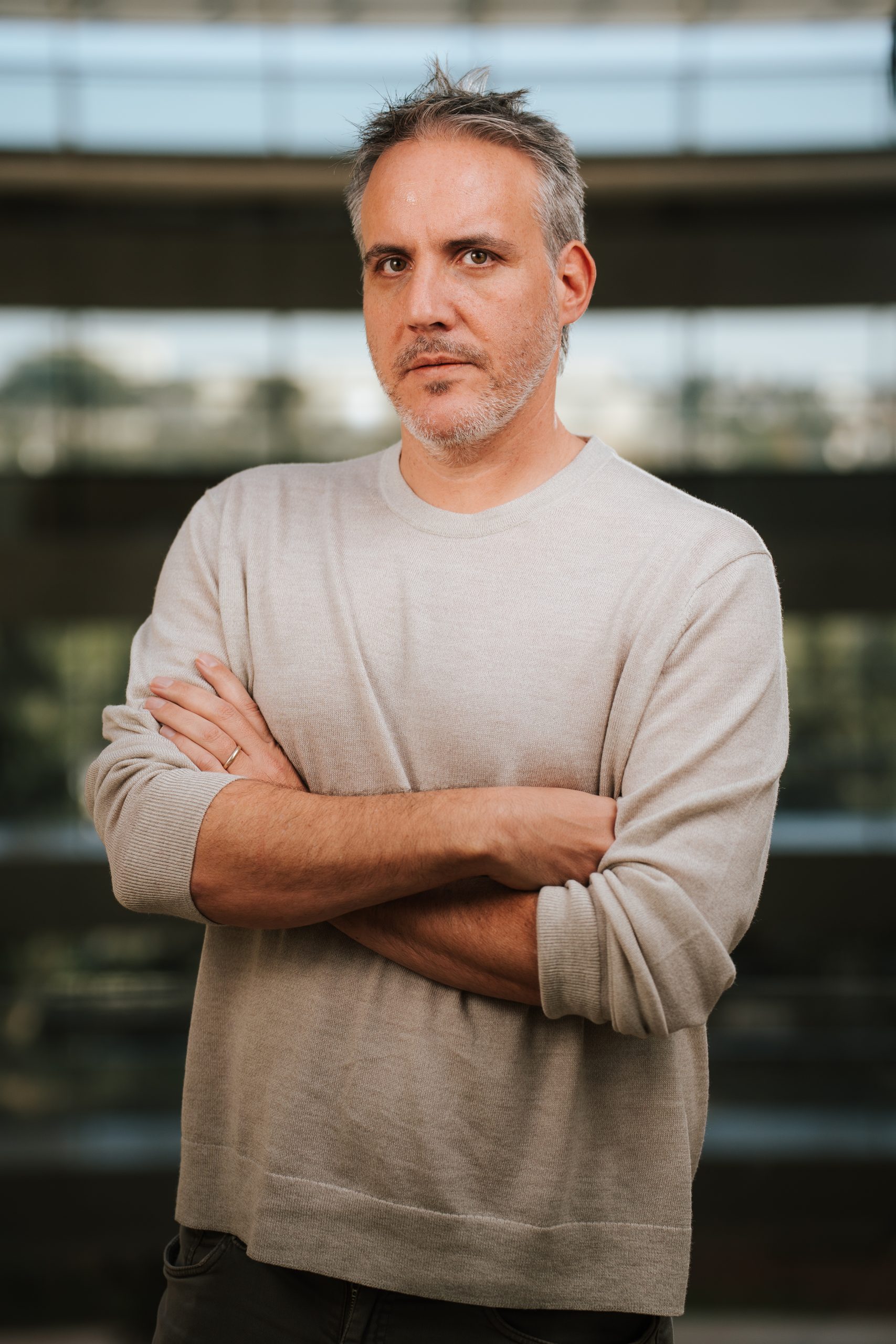
Jonathan Kadmon
Assistant Professor
The Suzanne and Charles Goodman Brain Sciences Building,
Edmond J. Safra Campus,
The Hebrew University of Jerusalem, 9190401