Open: Sun – Fri 08:00 – 22:00
Martine de Souza-Dassault Brain Art Gallery,
Goodman Brain Sciences Building,
The Edmond and Lily Safra Campus, Jerusalem
Speculative Beings and Unraveled Minds
The exhibition presents two works by Orit Ben Shitrit, an Artist in Residence at the Edmond and Lily Safra Center for Brain Sciences (ELSC) during the academic year 2025–2026. These works are part of an ongoing research-based artistic process developing during her residency at the Center. Later in the year, Ben Shitrit will present additional works and a final exhibition through an ongoing dialogue and collaboration with Prof. Inbal Goshen and her laboratory.
Speculative Beings and Unraveled Minds explores the spaces in which technology, narrative, and the blurring of ontological boundaries between the human and the non-human reshape consciousness. It asks: What becomes of memory, identity, and desire when the categories familiar to us: human, machine, spirit, and animal, cease to exist as separate entities and merge into new hybrid beings?
The works on view stage a layered dialogue between static drawing and narrative video, between monochrome abstraction and saturated, carnivalesque imagery, and between meditative stillness and bursts of visual noise. This back-and-forth mirrors research itself, offering a speculative look at how encounters with the unknown shape knowledge and consciousness.
In a reality of constant digital connectivity, what remains of our inner freedom? The works suggest how parts of consciousness must connect, unravel, or even “go wild” to withstand the pressures of the present. They propose art as an “island” of intentional inefficiency—an enclave where transformation and play open a space for release.
Orit Ben Shitrit, Memory Daydream, 2022, Acrylic, ink on paper
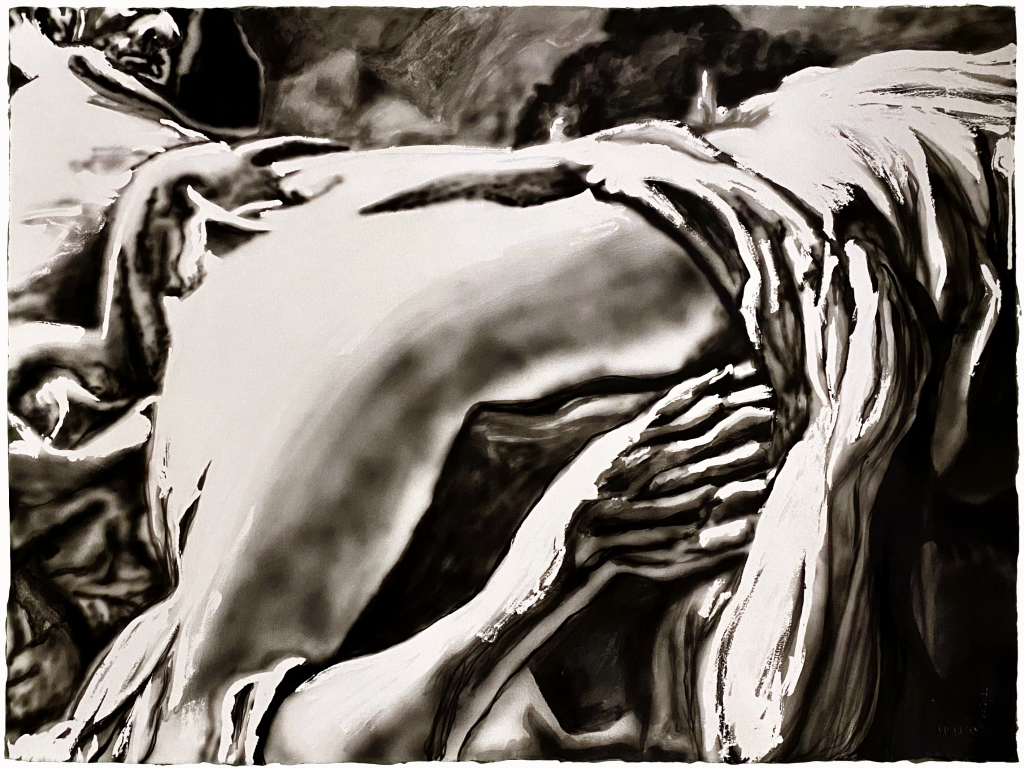
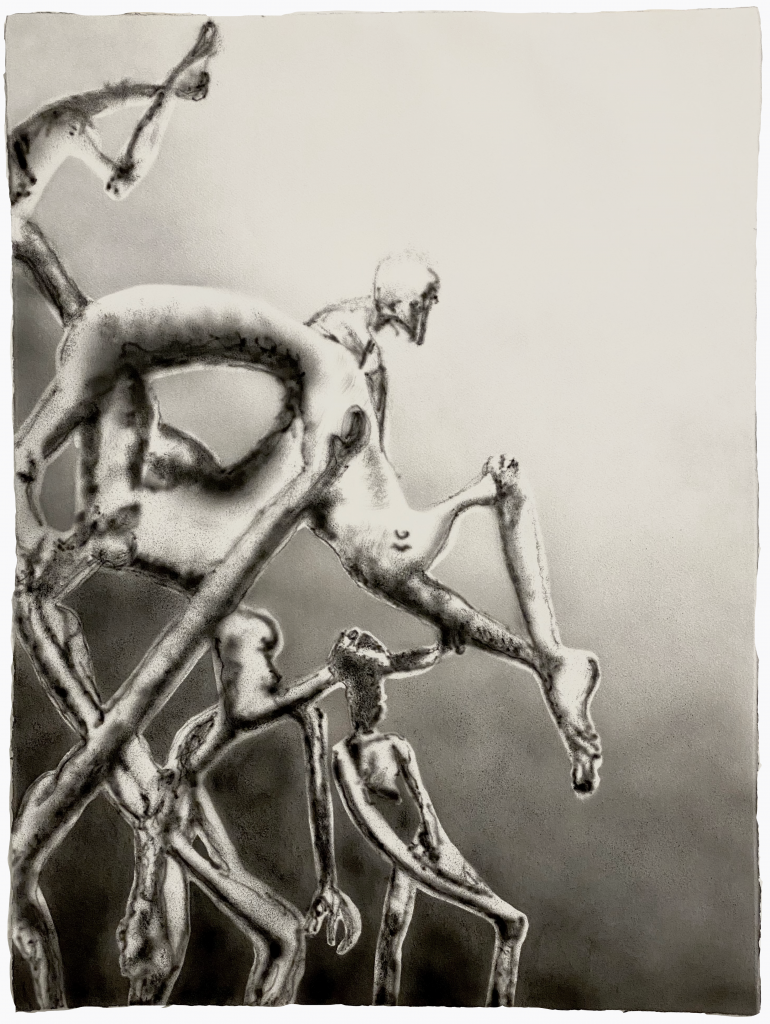
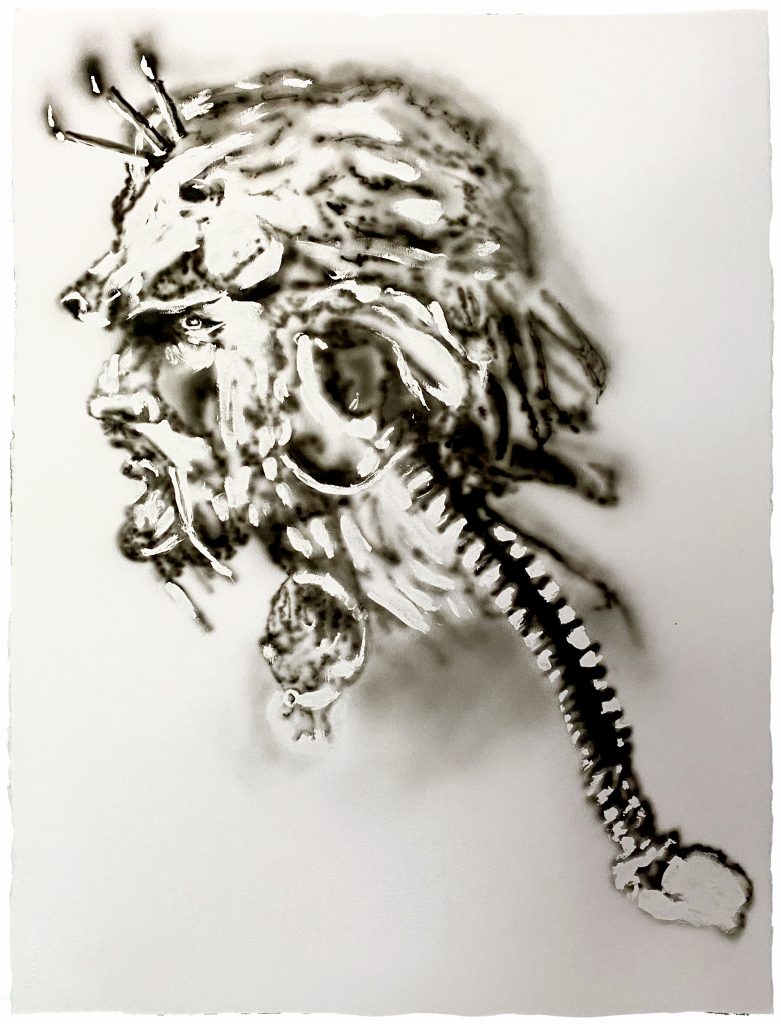
The painting Memory Daydream is composed of nine rectangles drawn in ink and acrylic in black and white on paper, each one suspended slightly away from the wall. The work is part of a series of paintings of the same name. These paintings have a futuristic quality, populated by hybrid creatures that move along the seams between the organic, the mechanical, and the vegetal. They offer a post-humanist view of a future world in which the human vantage point is no longer central. The images can be read as visual daydreams, or as the material embodiment of a machine hallucination.
By drawing these hybrid figures, the series does not merely depict a possible reality; it raises an ontological question about the nature of human perception. In a world where the boundaries between natural and artificial have collapsed, what is the significance of human existence? How is it transformed in the presence of synthetic–biological entities and intelligences?
The work leaves us with an open reflection: if identity itself is in a state of perpetual fluidity, then memory is not a remnant but a mechanism—a living material subject to editing and rewriting each time we return to it.
The series of paintings (also installed at additional sites throughout the building) forms a poetic extension of scientific discourse and turns a speculative gaze toward the act of investigation itself. The works probe the roles of curiosity, attention, and imagination in attempts to decipher the elusive concepts of consciousness, life, and technology. At the same time, the series functions as a meditative experiment in imagination, generating an alternative space of thought about the future of cognition.
Orit Ben Shitrit, Ward of the Feral Horses, 2017, HD video with sound, 19:24
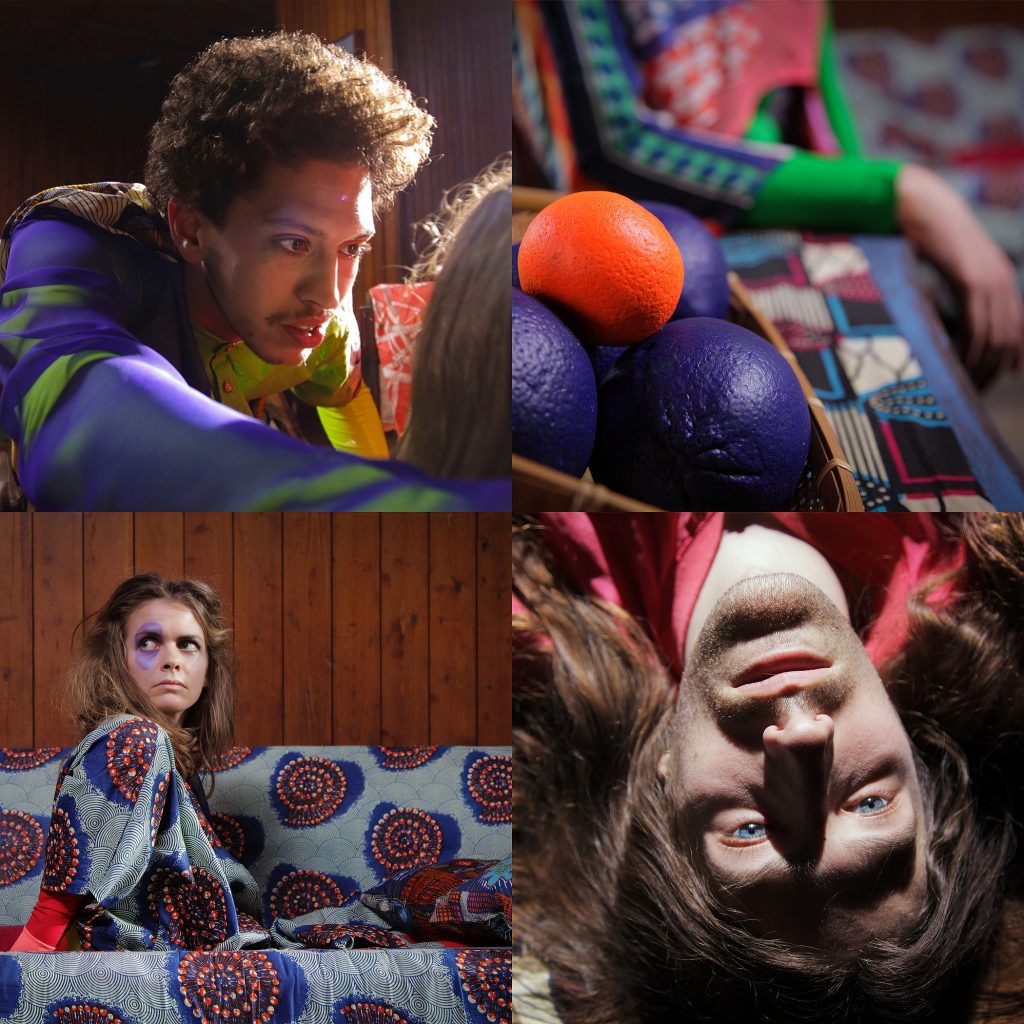
Ward of the Feral Horses is a narrative video set in a late-19th-century horse stable. At its center is a cyborg—a hybrid of biology and machine—on the verge of mental collapse. The work traces the failure of his inner, psychic communication with his own mature, pre-Oedipal voice. In a Sisyphean attempt to craft philosophical posts for an outdated social network, this older voice begins throwing the vowels through a narrow slit in his writing desk—a poetic gesture that disrupts language, breaks the flow of communication, and deepens his distress.
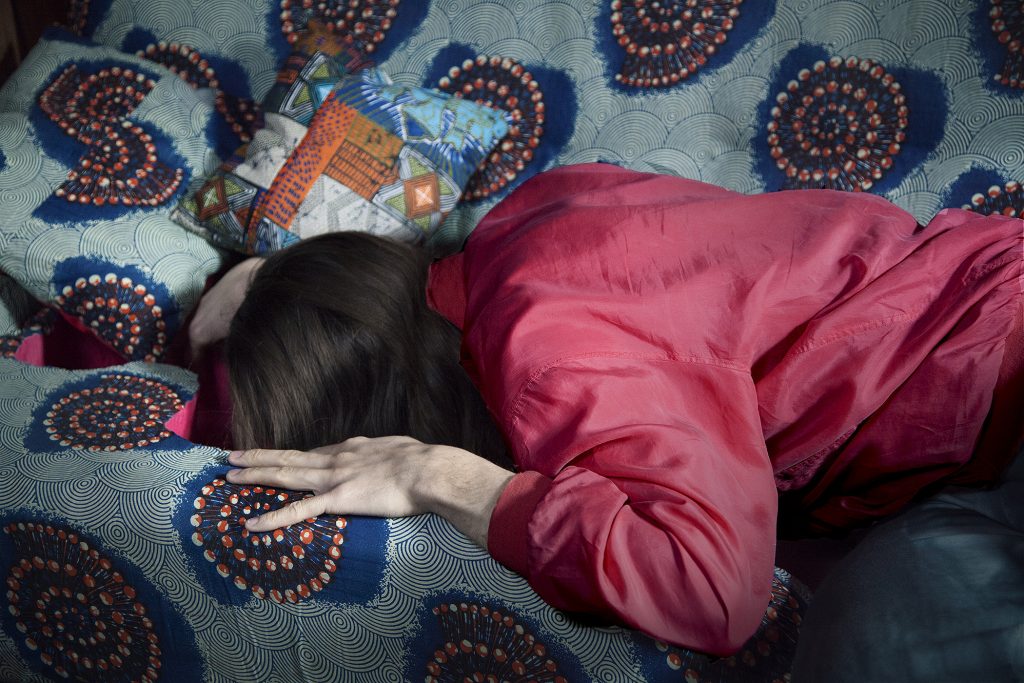
When the cyborg’s consciousness finally cracks, his inner world bursts into the physical space: from the furniture emerges a wild, multicolored dance ensemble of “spirit beings,” filling the room with music, carnivalesque color, and unruly movement.
The film weaves together personal and historical narratives inspired by folkloric traditions of demons and spirits made of “smokeless fire” (as described in the Quran). These entities, which historically served as conceptual meeting points between Judaism and Islam, are charged here with contemporary meaning as symbols of fluidity, ontological flexibility, and the unraveling of rigid identities and social norms.
Ward of the Feral Horses offers a critical reflection on the age of perpetual digital connectedness and the capitalist demand for constant productivity. The cyborg’s breakdown is framed not as failure, but as a radical act of resistance—a sensual eruption of texture and sound that celebrates imagination and the blurring of gender boundaries. Quotes from Gertrude Stein resonate throughout, linking early-20th-century industrial anxieties to today’s cognitive overload and flow of information
Curators: Dr. Michal Mor, Nili Vershov
The work was commissioned and produced by Experimental Media and Performing Arts Center (EMPAC), Rensselaer Polytechnic Institute, USA
Additional support from the Ostrovsky Family Fund



ישויות ספקולטיביות ומוחות פרומים
התערוכה מציגה שתיים מעבודותיה של אורית בן שטרית, אמנית אורחת (Artist in Residence) במרכז אדמונד ולילי ספרא למדעי המוח בשנת הלימודים תשפ״ו. עבודות אלה הן חלק מתהליך מחקרי־אמנותי הנרקם במסגרת שהותה במרכז. בהמשך השנה תציג בן שטרית עבודות נוספות, שחלקן נוצרות ומתאפשרות מתוך המפגש והדיאלוג המתמשך עם מעבדתה של פרופ׳ ענבל גושן.
ישויות ספקולטיביות ומוחות פרומים בוחנת את המרחבים שבהם טכנולוגיה, נרטיב וטשטוש גבולות אונטולוגיים בין האנושי לאל-אנושי מעצבים מחדש את התודעה. היא מעלה את השאלה: מה עולה בגורלם של הזיכרון, הזהות והתשוקה כאשר הקטגוריות המוכרות לנו – אדם, מכונה, רוח ובעל חיים – חדלות מלהיות ישויות נפרדות ומתמזגות ליצורי כלאיים חדשים.
העבודות המוצגות מקיימות דיאלוג רב-שכבתי ודינמי: בין הרישום הסטטי לאמנות הווידיאו הנרטיבית, בין הפשטה מונוכרומטית לדימוי רווי וקרנבלי, ובין התבוננות מדיטטיבית שקטה לפרץ של שאון ויזואלי. בהקשר זה, השיח מתרחב ומשתקף בפעולת המחקר עצמה. התערוכה מציעה מבט ספקולטיבי על תהליכי חקירה וניסוי, ורואה במפגש עם הלא-נודע פתח להבנה חדשה של האופן שבו ידע ותודעה מתהווים.
במציאות של חיבור דיגיטלי תמידי, מה נותר מהחופש הפנימי שלנו? העבודות בוחנות כיצד חלקים בתודעה חייבים להתחבר, להיפרם או אף ״להשתגע” בכדי לעמוד בלחצי ההווה. הן מציעות את האמנות כ’אי’ של חוסר-יעילות מכוון: מובלעת שבה השתנות ומשחק מאפשרים מרחב של שחרור.
אורית בן שטרית, חלום בהקיץ של זיכרון, 2022, אקריליק ודיו על נייר
הציור חלום בהקיץ של זיכרון מורכב מתשעה מלבנים המצוירים בדיו ואקריליק בשחור-לבן על נייר ותלויים בריחוף מהקיר. הציור הנו חלק מסדרת ציורים באותו שם. הציורים נושאים אופי עתידני של יצורי כלאיים הנעים על התפר שבין האורגני, המכאני והצמחי. אלו הם דימויים המציעים מבט פוסט-הומניסטי על עולם עתידי שבו נקודת המבט האנושית אינה עוד במרכז, וניתן לראות בהם ביטוי לחלומות חזותיים בהקיץ, או התגלמות חומרית של הזיית מכונה.
דרך רישום דמויות הכלאיים, הסדרה אינה רק מתארת מציאות אפשרית, אלא מעלה תהייה אונטולוגית על טבעה של התפיסה האנושית: בעולם שבו הגבולות בין הטבעי למלאכותי קרסו, מה היא חשיבות הקיום האנושי? כיצד הוא משתנה אל מול נוכחותן של ישויות ואינטליגנציות סינתטיות-ביולוגיות?
היצירה מותירה אותנו עם מחשבה פתוחה: אם הזהות עצמה מצויה בנזילות תמידית, גם הזיכרון אינו שריד אלא מנגנון: חומר חי הנתון לעריכה ולשכתוב בכל פעם שאנו שבים ונוגעים בו.
סדרת הציורים (התלויים גם במוקדים נוספים ברחבי הבניין) מהווים הרחבה פואטית של השיח המדעי ומפנים מבט ספקולטיבי על פעולת החקירה עצמה. הם בוחנים את מרכיבי הסקרנות, הקשב והדמיון הנחוצים בניסיון לפענח את המושגים החמקמקים של תודעה, חיים וטכנולוגיה. לחלופין, הסדרה מתפקדת כניסוי מדיטטיבי בדמיון, המייצר מרחב מחשבה אלטרנטיבי על עתיד הקוגניציה.
אורית בן שטרית, מחלקת סוסי הפרא, 2017, וידאו, 19:25
מחלקת סוסי הפרא היא עבודת ווידאו נרטיבית המתרחשת בחלל של אורוות סוסים משלהי המאה ה-19. בלב היצירה מוצג סייבורג היברידי (ביולוגי ומכאני בו זמנית) השרוי על סף התמוטטות מנטלית. העבודה בוחנת את הכשל בתקשורת הפנים-נפשית של הסייבורג עם קולו הבוגר והקדם-אדיפלי. במהלך ניסיון סיזיפי לניסוח הגות עבור רשת חברתית מיושנת, משליך הקול הבוגר את אותיות הניקוד (vowels) דרך חרך בשולחן העבודה. פעולה פואטית זו משבשת את השפה, קוטעת את הרצף התקשורתי ומחריפה את המצוקה הנפשית של הסובייקט.
ברגע שבו תודעת הסייבורג נסדקת, עולמו הפנימי פורץ אל המרחב הפיזי: מתוך הרהיטים מגיח אנסמבל מחול פראי ורב צבעים של “יצורי רוח”, הממלאים את החלל במוזיקה, צבעוניות קרנבלית ותנועה בלתי מרוסנת.
הסרט שוזר יחד נרטיבים אישיים והיסטוריים, השואבים השראה ממסורות פולקלוריות של שדים ורוחות העשויות “אש ללא עשן” (כפי שמתוארות בקוראן). ישויות אלו, ששימשו לאורך ההיסטוריה כנקודות מפגש רעיוניות בין היהדות לאסלאם, נטענות כאן במשמעות עכשווית: הן הופכות לסמלים של נזילות, גמישות אונטולוגית ויכולת לפרום זהויות ונורמות חברתיות נוקשות.
מחלקת סוסי הפרא מהווה רפלקציה ביקורתית על עידן המחוברות הדיגיטלית התמידית, והדרישה הקפיטליסטית לפרודוקטיביות. קריסתו של הסייבורג אינה מוצגת ככישלון, אלא כפעולת התנגדות רדיקלית– התפרצות חושנית של טקסטורה וצליל החוגגת את הדמיון ואת טשטוש הגבולות המגדריים. לאורך הסרט מהדהדים ציטוטים של גרטרוד שטיין, המותחים קו מחבר בין חרדות התיעוש של ראשית המאה ה-20 לבין העומס הקוגניטיבי המאפיין את זרם המידע הבלתי פוסק בהווה.
אוצרות: ד”ר מיכל מור, נילי ורשוב
העבודה הוזמנה והופקה על ידי מרכז האמנויות הניסיוניות
Experimental Media and Performing Arts Center, Rensselaer Polytechnic Institute(EMPAC) USA
תמיכה נוספת על ידי קרן משפחת אוסטרובסקי