ELSC Seminar Series
Home » ELSC Seminar Series » The (im)persistence of memory: A cell biologist perspective
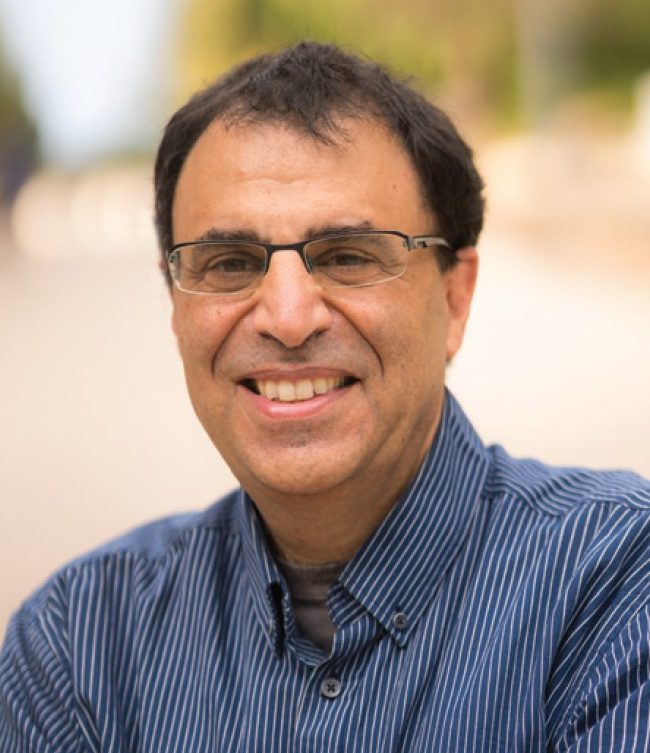
Prof. Noam Ziv
The (im)persistence of memory: A cell biologist perspective
Activity-dependent modifications to synaptic properties are widely believed to constitute a fundamental mechanism for embedding memories of past events in neuronal networks. This belief also implies, however, that synapses, when not driven to change their properties by physiologically relevant stimuli, would be expected to retain these properties over time. This expectation is challenged by the innate dynamics of synaptic molecules, the logistics of providing remote synapses with building blocks at appropriate amounts and stoichiometries, and the huge mismatch between the lifetimes of synaptic molecules and the synapses themselves. Indeed, imaging studies reveal that synaptic properties change considerably in manners that do not depend on particular activity histories, or for that matter, on activity at all. Interestingly, these spontaneous synaptic remodeling dynamics, referred to as intrinsic dynamics, are governed by well-characterized stochastic processes. In fact, these processes can give rise to a full gamut of synaptic sizes, and can shape, confine and continuously renormalize synaptic size distributions. At the same time, however, intrinsic dynamics continuously erode synaptic size configurations, possibly eroding memories encoded in the original configurations. While many studies have attempted to reconcile the presence of intrinsic dynamics and memory persistence, the arguably most parsimonious interpretation relates to the fact that many, if not most memories do not persist over time. Put differently, intrinsic dynamics might simply result in forgetting. Our current understanding of intrinsic dynamics, their consequences and our ongoing efforts to examine relationships between intrinsic dynamics, memory decay and forgetting will be described.
Seminar Date & Time:
Notifications are sent to ELSC seminar mailing list, subscribe here.