We are interested in solving the secret of cognitive resilience. The cellular microenvironment in the brain is composed of multiple cell types, including neurons, astrocytes, microglia, vascular and other cells, and we are studying how interactions between different cell types in the brain are contributing to cognitive decline and to cognitive resilience, in particular in the context of aging-related pathologies. We also study how interactions between the brain and other systems in the aging body, such as immune and metabolic signaling, are mediating aging-related pathologies. The work is done using human brain tissue, animal models and cell cultures, combining cutting-edge technologies in the fields of genomics, imaging, molecular biology, and genome engineering, with advanced computational analysis and modeling. Specifically, we are pioneering the development and application of single nucleus RNA-sequencing technologies.
Naomi Habib Lab
ELSC Members
Home » ELSC Members » Naomi Habib






Nature (2024)
Sci Transl Med. (2021)
Ann N Y Acad Sci. (2021)
Nat Neurosci. (2020)
Nature Communications (2020)
Nat Neurosci. 23, 701–706 (2020)
Nat Commun (2019)
Alzheimer's & Dementia 14: P1544-P1545 (2018)
Nat Methods (2017)
Science (2016)
Nature Chemical Biology volume 12, pages 1037–1045 (2016)
Nat Biotechnol (2015)
Science, Vol. 339, Issue 6121, pp. 819-823 (2013)
Divide and conquer. New single-cell approach broadens range of cell types that can be studied in the brain. 2016
Div-Seq – A single nucleus RNA-Seq method reveals dynamics of rare adult newborn neurons in the CNS. 2016
A Google Map of the Brain. 2017
DroNc-Seq – Single-nucleus RNA sequencing, droplet by droplet. 2017/2018
“Cellular landscapes of the mouse and human brains”. 2018.
“Single nucleus RNA-seq in the adult mammalian brain”. 2017.
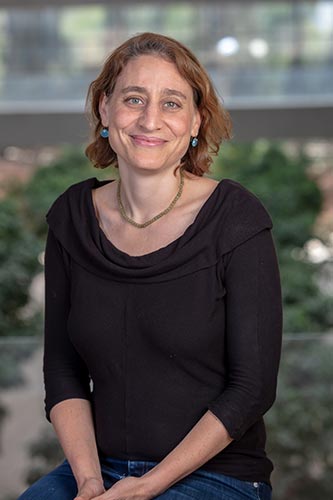
Naomi Habib
Associate Professor
The Suzanne and Charles Goodman Brain Sciences Building,
Level 2, Room 2207, Edmond J. Safra Campus,
The Hebrew University of Jerusalem, 9190401
We are interested in solving the secret of cognitive resilience. The cellular microenvironment in the brain is composed of multiple cell types, including neurons, astrocytes, microglia, vascular and other cells, and we are studying how interactions between different cell types in the brain are contributing to cognitive decline and to cognitive resilience, in particular in the context of aging-related pathologies. We also study how interactions between the brain and other systems in the aging body, such as immune and metabolic signaling, are mediating aging-related pathologies. The work is done using human brain tissue, animal models and cell cultures, combining cutting-edge technologies in the fields of genomics, imaging, molecular biology, and genome engineering, with advanced computational analysis and modeling. Specifically, we are pioneering the development and application of single nucleus RNA-sequencing technologies.




The Journal of neuroscience : the official journal of the Society for Neuroscience (2026)
Nature neuroscience (2026)
Neuron (2026)
Commun Biol. (2020)
J Neurochem (2020)
PLoS Biology (2020)
PLoS Biology (2020)
Journal of Neuroscience, JN-RM-1470-21 (2021)
Neuron, ISSN 0896-6273 (2021)
bioRxiv preprint first posted online May. 31, 2019 (2019)
bioRxiv preprint first posted online Apr. 18, 2019; (2019)
Cell reports 23 (4), 1034-1044 (2018)
Cell, Volume 174, Issue 1, 28 June 2018, Pages 59-71 (2018)
Scientific Reports, volume 8, Article number: 4311 (2018)
Molecular autism 9 (1), 57 (2018)
Cytotherapy 20 (5), S23 (2018)
US Patent App. 15/755,138 (2018)
Behavioural Brain Research Volume 331, Pages 254-260 (2017)
Nature Neuroscience, VOLUME 20 | NUMBER 7 | JULY 2017 (2017)
Scientific Reports volume 6, Article number: 29080 (2016)
Frontiers in Behavioral Neuroscience, 10:236 (2016)
Nat Neurosci. 2002 Apr;5(4):332-40. (2002)
J Comput Neurosci. 2000 Sep-Oct;9(2):133-48. (2000)
Science. 2000 Oct 27;290(5492):744-50 (2000)
Journal of Neuroscience 1 October 1999, 19 (19) 8219-8233 (1999)

Michael London
Associate Professor
The Suzanne and Charles Goodman Brain Sciences Building,
Level 1, Room 2103, Edmond J. Safra Campus,
The Hebrew University of Jerusalem, 9190401